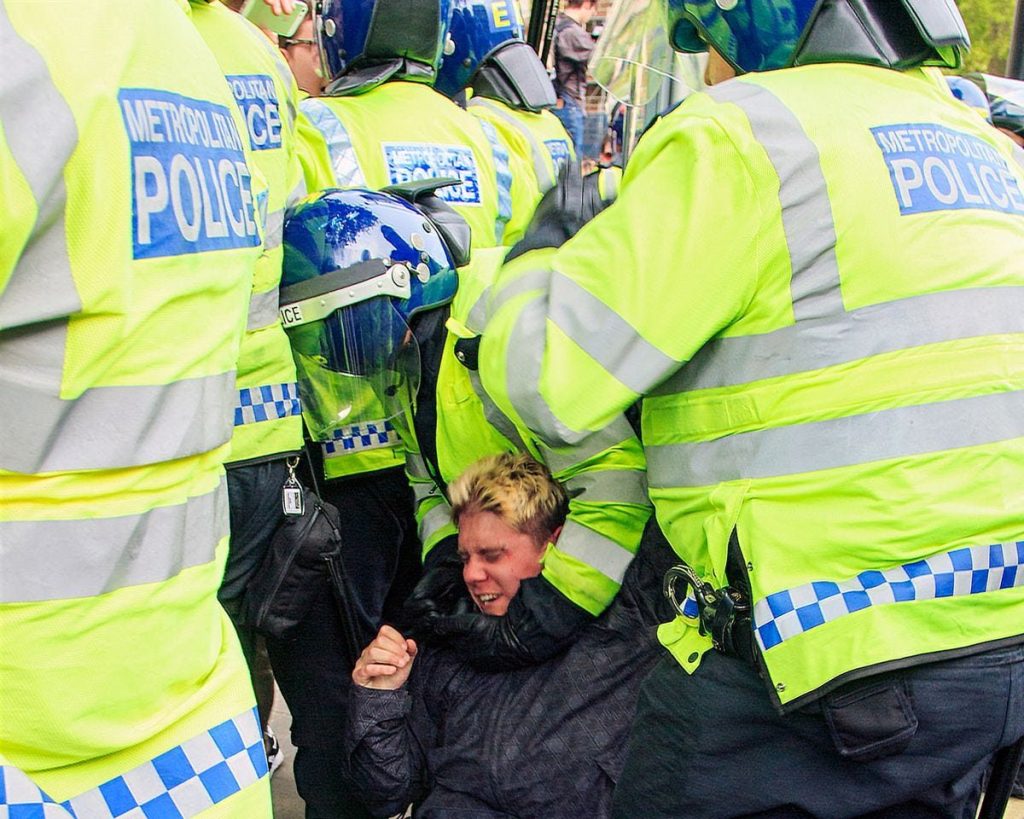
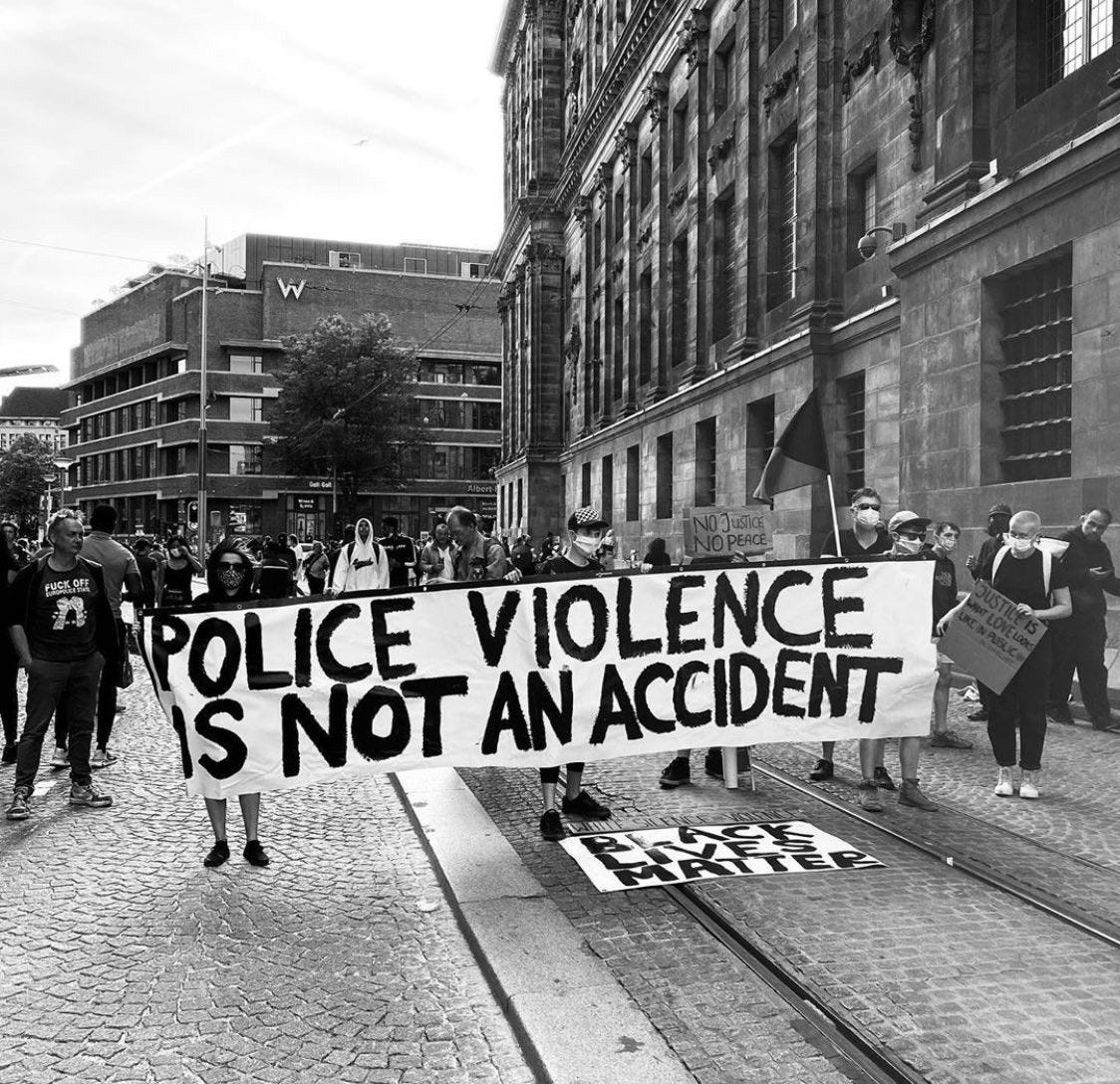
In recent years, it feels as though we see more and more examples of state violence. Nearly every day on social media, we see clips of the police or other state agencies roughhousing, shoving and beating citizens. These videos have a multitude of contexts, very few of which make the use of violence acceptable. So why are we seeing this more frequently?
Violence on the internet is nothing new. Videos of ISIS beheadings, grainy CCTV footage of gory accidents, and, more recently, footage of Israeli war crimes have all been easily accessed on the internet for decades.
People are also filming things more. TikTok and Instagram Reels have created a space in which anyone can have a clip go viral, and people are very aware of this. Every protest and every major public event is now filmed and uploaded online for all to see. It is hard to walk around where I live without bumping into a local news outlet, influencer or right-wing grifter filming and trying to interact with people for clicks. With this in mind, it makes sense that we see more and more examples of the state acting violently towards civilians.
Looking into this more closely, there are two events from earlier this year in which we repeatedly see the state’s actions captured on camera. Firstly, the ICE raids in America. Shocking videos of the murders of Renée Good and Alex Pretti by ICE thugs have emerged, showcasing multiple angles and perspectives of the killings. Videos even caught ICE agents calling Renée Good a “fucking bitch” after shooting her and another agent saying “boo-hoo” after Alex Pretti’s execution. These videos demonstrate how easy it is for us to access footage of state-sanctioned murder.
Bringing it back to Britain and Europe, we can see how the police over here act in an overly aggressive manner. Peaceful marches and protests often end in chaotic, violent scenes, not due to the civilians’ actions but due to the police’s excessive use of force and antagonising tactics. Videos from Germany show the police aggressively arresting pro-Palestine protestors. The grounds for arrest vary, but many surround the German’s ban on the Keffiyeh and its use as a face covering in protests. This discriminates against pro-Palestine activists who use this as a symbol for Palestine and Palestinian defiance; no such ban has been made on Zionist face coverings. Events such as these not only demonstrate the police’s thuggish attitudes and behaviours but also their political biases in play, upholding the state’s line on supporting a genocidal regime.
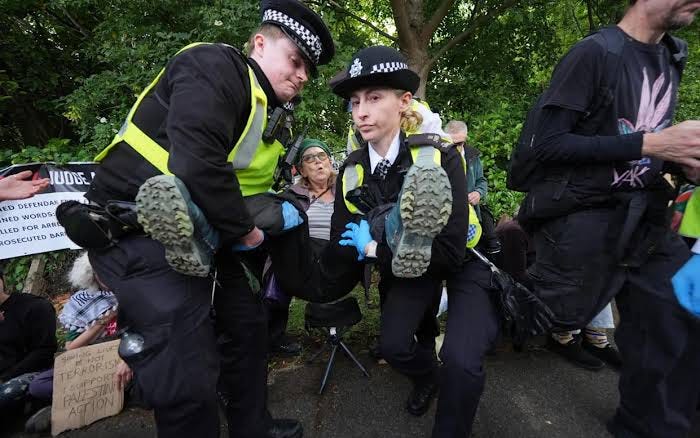
In the UK, thousands of protestors have been arrested for protesting Israel’s genocide and announcing their support for Palestine Action, a group the UK government has proscribed as a terrorist organisation. These protestors are often carried out by police, old, disabled, whoever, the police do not care. Treatment has been so poor that some protestors went on hunger strike, nearly dying just for the right to a fair trial and bail. And despite activists recently being found not guilty of aggravated burglary, they were still held in jail for over 500 days before this. For many, state violence goes beyond the initial arrest; 1219 people have died in police custody since 1990, the circumstances of which are rarely allowed to face general public scrutiny.
But how did this come about? How come the state allows itself and its thugs to be caught, acting so brazenly?
There are many reasons for this. Firstly, it is worth noting that such state violence against citizens is not new; with the advent of smartphones and social media, it is simply easier to record and share footage of these events than before. David Oluwale was a Nigerian immigrant to the UK, who throughout the 1960s was consistently harassed and abused by local police; two officers in particular are believed to have contributed to his mysterious death in 1969. We know of this only because of a report by a police cadet that led to an investigation and the subsequent imprisonment (for only 3 years) of the officers. Without the cadet’s report, it is likely Mr Oluwale’s tragic story would have never come to light. This begs the question, how many more stories like David Oluwale’s are out there that we simply are not aware of due to the lack of technology and the ability to widely share it?
So now with these abuses being caught and recorded, why does the state feel able to carry on in this way? It stems from a lack of actual checks and balances. The state polices itself, and, in rare cases, it punishes state actors who have crossed a line. This usually follows sustained public outrage, which the state deems too dangerous to continue, prompting it to make a concession. But with these events occurring nearly daily with the advent of Palestine and anti-ICE protests, there are simply too many instances of state violence for the general public to force the government’s hand.
Also, whilst social media is effective for sharing and highlighting the abuse, the cycle moves too fast, and people move from one video to another in an instant; a sustained campaign is difficult to maintain. In chasing justice, the ICE agents who executed Renée Good and Alex Pretti have not faced any consequences, not even a slap on the wrist. This partially comes down to the American government’s stance on appearing strong, but also due to the fact that social media moves so quickly, we have already moved on to the Epstein files and are angry at that. Traditional media would be more helpful in putting pressure on the government to act. This, however, is limited by the fact that the bourgeois media is in their pocket; they never seriously challenge the status quo. Right-wing outlets also push conflicting reports, suggesting, for example, that Alex Pretti had a gun or that Renée Good attempted to run over the agent who murdered her. This further destabilises campaigns for justice.
So what can we do? How can this change, and will it get better? I certainly hope so. I think the movements that have emerged, particularly in America this year, challenging ICE, are operating at a much higher political and organisational level than we’ve seen before. Citizens are exercising their Second Amendment rights to confront ICE agents, local signal groups are blowing whistles and tracking their movements, and local councils are springing up to organise local workers and plan next steps. All of these actions form the basis for workers organising to challenge the state’s power and to impose some form of containment on the state’s violence. We already see its effectiveness in the quiet withdrawal of ICE from Minnesota.
The state holds a monopoly on legal violence, and it utilises this often to curb workers movements and people pushing for real change. This is not a show of strength from capitalism but a damning indictment of its weaknesses and fear, attempting to wrangle some control over the anarchic system. Free Palestine, abolish the police and abolish capitalism.
by n8n