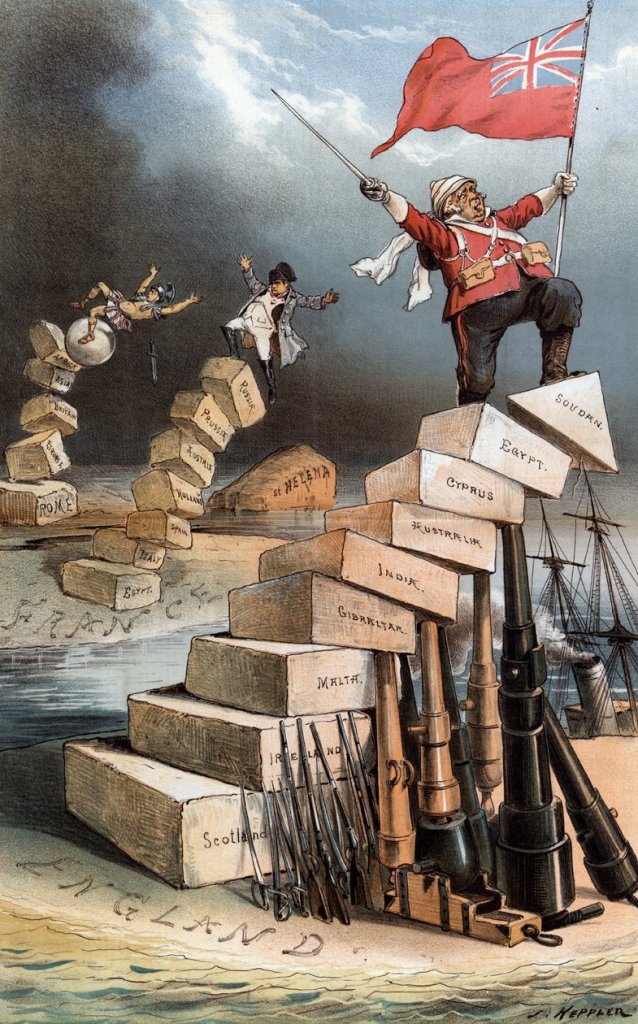
Karl Marx wrote that history repeats itself “the first time as tragedy, the second time as farce” and whilst this is, of course, not literally true, events from history do sometimes bear striking similarities. But why is this the case? Why do humans seem to end up in similar situations, make similar mistakes, and meet similar endings?
Well, firstly, to understand this we need to understand that a lot of these events are only repeating in one or two ways. For example, although in very different contexts and doing so for very different reasons, both Napoleon Bonaparte and Adolf Hitler, of course, invaded Russia and both failed miserably, leading to their ultimate defeat. Similarly, Mahatma Gandhi and Martin Luther King both advocated for non-violent protest to achieve their aims, only to be assassinated. And finally, looking at the degenerative end stages of the Roman Empire, we can draw similarities to today and the capitalist system in its death throes. These events and similarities all occurred for different reasons and in different contexts, but it is amusing to draw the comparisons.
So is it just that history doesn’t really repeat and people just try to force this trend? Not entirely. Deeper trends run behind this. History can share some striking comparisons and people do seem to act the same in completely different times. Before looking at the real reason why this is we first should analyse some other explanations and their shortcomings.
Other Explanations
The idea that history repeats itself has been mused on by a litany of thinkers of the years. Many have tried to draw conclusions and look at deeper trends using this concept. The 5th-century historian Zosimus saw history as general movements which he related to astral orbits, he used this method to predict Rome’s decay. He looked at the recurring decay of empires and predicted Rome’s fall. Though this is of course, just a good guess, there is almost some sort of scientific method here. Zosimus fails to understand the economic processes and underlying material elements that cause empires to decay and fall, but it is interesting nonetheless.
Similarly, Niccolò Machiavelli also analysed trends of historical repetition. Looking at a 60 year period of politics in Italy and Florence, he noted recurrent oscillations between what he saw as order and disorder within states. The general trend would be that states achieve their greatest perfection then begin to decline. Machiavelli believed this was because peace brought idleness, disorder and ruin and that ruin brought virtue, glory and good fortune. Hard times make strong men, strong men make good times, good times make weak men ass conclusion that does not hold true at all. There are plenty of examples of this simply not happening.
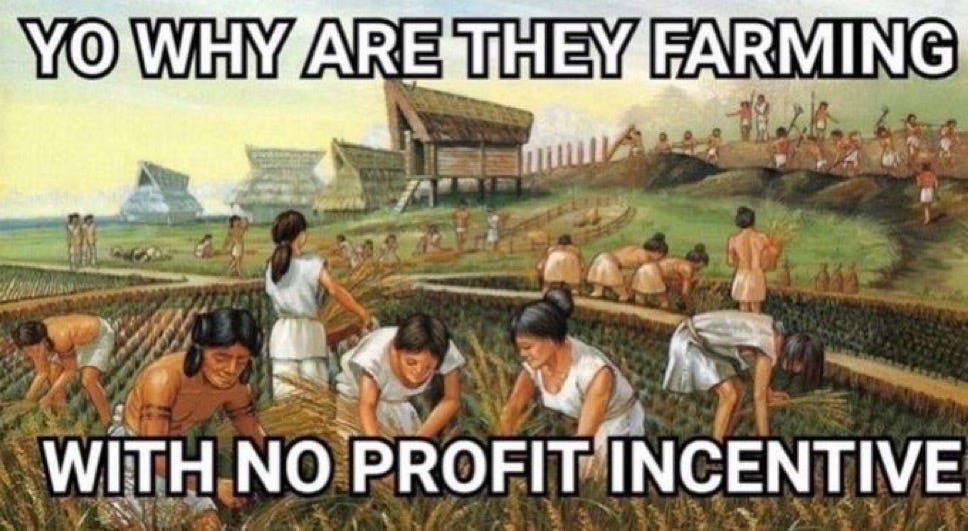
Many modern historians also observe trends in historical recurrences. G. W. Trompf suggests that as human nature does not change, the same sort of events can recur at any time. This conclusion is complete rubbish. The idea that human nature is fixed and unchanging lacks any kind of scientific analysis. It is an abstract conclusion that can simply be unwound by asking basic questions. If human nature is unchanging then how do we explain progress of any kind? How did we evolve from nomadic tribespeople to civilised society? One day, nomadic cultures began making permanent settlements. At the time, I am sure many suggested that it was not in our nature to do this, we as humans were naturally nomadic people, but this fact has since proven wrong. Most humans now live in permanent settlements. How can Trompf and his ilk explain this and other changes in human behaviour and society?
Other historians lean into these patterns and suggest theories. Joshua S. Goldstein suggests that empires follow a life cycle, much like a person’s. Empires experience a midlife crisis after achieving all their earlier goals. Goldstein points to Britain and the Crimean War, America and the Vietnam War and Germany and the First World War as examples of this. Other scholars, such as Neil Howe and William Strauss, have developed theories that Western history follows generational cycles. They argue that we are all children of our time. We take our experiences from childhood into adulthood and these experiences leave traces within us that shape how we approach the world. Both of these attempts to understand history lack any definitive explanation. They both deal in abstract generalised ideas of life cycles. Goldstein’s theory is intriguing and has some interesting examples. However, a historical materialist explanation can better explain these events. The theory of Howe and Strauss is so bad it is laughable. The abstract idea that an individual generation’s experience informs their adult approach is, of course, a fair and interesting idea generally speaking, but to apply it to the development of history and human society plays into some kind of great man theory that just does not hold up.
One final popular trend that I think may be most popular among non-Marxist historians is the post-modernist idea that history follows no laws and we cannot draw any kind of grand conclusions from it. The appearance of repeated events is merely a coincidence and there is no use in studying the general trends of history. This view is completely wrong. Modern science has concretely established that everything from small particles to the universe itself follows laws. The idea that we as a species and our history stand above the whole of nature and the universe is as arrogant as it is silly. This flows from the biblical notion that humans are some kind of special and unique creation of God, so special that any attempt to understand humans is impossible. Postmodernism’s foundations in being funded by the CIA and their complete lack of a scientific approach should tell you all you need to know about this ridiculous idea.
So what is really going on here? Why does history seem to repeat itself if it isn’t some kind of cycle or product of human nature? What laws does it follow if it is not unpredictable? Well, history is best studied through the lens of historical materialism. By studying the economic processes that run through a society and influence it in turn we can draw larger conclusions about history.
Historical Materialism
To understand why history appears to repeat itself we must understand what history is and the laws that govern it. History presents itself to us as a series of actions and reactions by individuals in a variety of contexts and in the complex spectrum of social development. Individual actors in history are acting based on the unconscious expression of deeper processes which work through social interrelations and ultimately condition the actions of individuals and determine their outcome. Some factors weigh heavier than others. Historical accidents, competence, incompetence, bravery and cowardice of individual people and the influence of the religious, philosophical and moral ideas of the time are all factors. However, the most important factor is the socio-economic system that underpins a society.
Karl Marx uncovered the factors that lie behind the development of human society and it can be traced from the earliest tribal societies to the modern day. Before people can think, create and produce, they must eat, be clothed and be sheltered. The economic base of society that causes this, in turn, is the main lever and effector of change in history. When humans transition from one society to another, questions of food, shelter and basic needs are usually at the forefront. As a species, we progress into a much more productive age that can ensure these basic needs and further productive forces. As Friedrich Engels wrote in Anti-Dühring:
“The final causes of all social changes and political revolutions are to be sought, not in men’s brains, not in men’s better insights into eternal truth and justice, but in changes in the modes of production and exchange.”
History is dialectic, and society is a feedback loop. The economic base does not respond the same way every time something happens. It is influenced by the superstructure (society) and this superstructure is in turn influenced by the economic base. The economic base simply creates the framework for the field of development. In The Eighteenth Brumaire of Louis Bonaparte, Marx wrote that:
“Men make their own history but they do not make it as they please.”
This shows that the base sets the framework for development. The ideas, individuals and movements that successfully carry out their aims are in some way determined by natural selection and are limited by their economic base. This is why the Roman Republic didn’t just suddenly become communist despite the slave rebellions and the mass accumulation of wealth. They were limited by their epoch. The productive forces had not developed enough for this kind of society to be created.
The economic base in a society comes into conflict and contradiction with its own superstructure and this is where change and progress comes from. The superstructure undermines its base, as the base wishes for continuity but ironically in doing so it forces change. For example, capitalism has developed over hundreds of years now, but in essence it is the same. It is governed by the same laws and rules but has expanded globally, creating the global market and the working class but in doing this it has created monopolies and imperialism, the very opposite of the idea of a free market and competition. Just look at how Amazon, PepsiCo, and other huge conglomerates eat up smaller companies, taking more of the pie in the process. In this process, the superstructure at the top stops being productive for its base. The system no longer progresses but actually drags things back.
So what does this mean to say about history repeating itself? Well, in looking at the base and what it wants, it wants continuity. Currently, capitalism seeks to keep growing, expand the market, and increase profits, but in expanding the market it creates problems. Financial crises, mass opposition and an increasing gap between the rich and the poor all threaten its very existence. We see financial crises all the time. The Great Depression, the slump in the 1970s, 2008 and now the cost of living crisis, these appear to be repeats and they all stem from the fact that the capitalist system is no longer progressive or productive. We have reached the limits of what this system can achieve and the more it limps on the more problems it encounters. In its solutions, it creates more issues for the future (e.g. bubbles in housing, AI, etc.).
This fundamentally explains why we keep feeling as though we live in some kind of time loop. The capitalist class no longer have the answers. Their system is crumbling and they cannot solve the crises they create. Ironically, despite all my talk of repetition in this article there is one interesting dialectical law I will end on. Things can, and often do, change into their opposite. The United States of America started out as an oppressed colony of Great Britain; today it is the most powerful imperialist nation on earth. Capitalism once was a progressive force in society, carrying humans out of feudalism and into a new age. An age where we created surplus and produced things in abundance for the first time in our history. It is now no longer progressive. Capitalism oversees the surplus humanity creates be hoarded by a few whilst millions starve and billions live in poverty. We make enough for everyone but this cannot be enjoyed until we do away with the rotten system and throw it, and all its repetitions, into the dustbin of history.
When history repeats itself, it does so on a higher plane of consciousness. The masses are neither static nor eternal but in a state of constant change and motion. The working class will again rise up against its oppressors, as it has done many times before, but history’s betrayals and defeats raise this new resurgence of the class struggle to new heights. The repetition will be broken, and humanity will move forward.
by n8n.